Passed the vision screening at school, work, or the DMV? That’s not the same as an eye exam
Quick answer: A vision screening is a quick pass/fail check of how clearly you see at a distance — the letter chart at school, the DMV, or a workplace physical. A comprehensive eye exam is performed by an eye doctor and evaluates your prescription, eye muscle coordination, and the internal health of your eyes, including checks for diseases that a screening can’t detect at all.
We hear this a lot, especially from parents: “She passed the vision screening at school, so we figured her eyes were fine.” A screening only tests one thing — how sharp your distance vision is on a chart. It says nothing about eye teaming, focusing ability, or whether the internal structures of the eye are healthy. A child can have 20/20 distance vision and still struggle with a vision problem that makes reading exhausting.
A vision screening is fast, usually free, and administered by a school nurse, DMV clerk, or workplace health service. It’s a single measurement: can you read letters of a certain size at a certain distance. That’s it. It’s a useful early flag, not a health check.
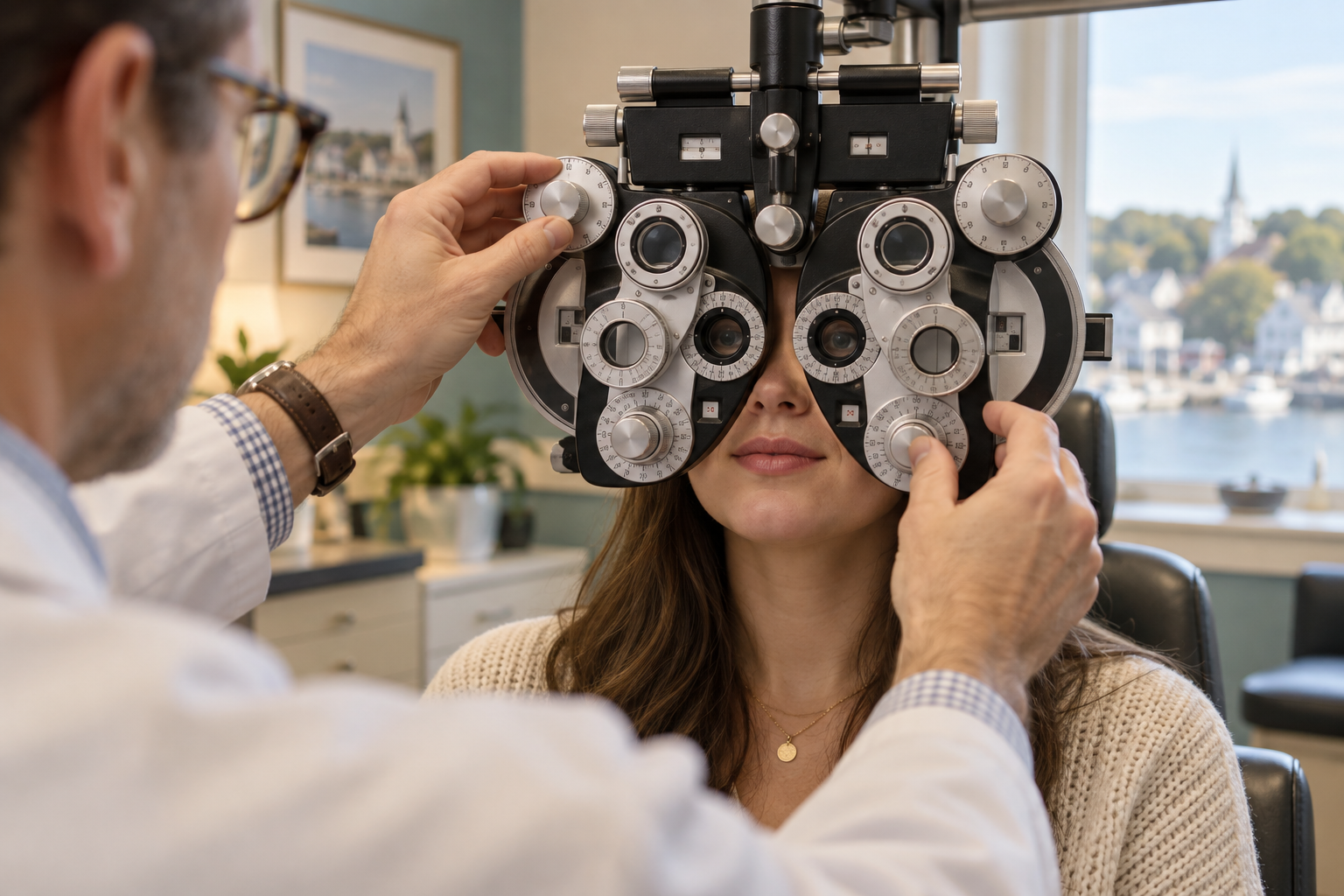
A comprehensive eye exam is performed by an optometrist and covers considerably more ground:

No — a screening can’t detect glaucoma, diabetic eye disease, or focusing problems, all of which have no symptoms early on.
The American Optometric Association recommends adults get a comprehensive exam every one to two years depending on age and risk factors, regardless of screening results.
Screenings only test distance vision. Eye-teaming and focusing problems, which directly affect reading, aren’t part of a screening at all.
A passed screening is good news, but it isn’t a substitute for an actual exam. If it’s been a year or more since your last comprehensive exam, the screening at your last physical doesn’t cover you.
Schedule your comprehensive eye exam today.