


.png)

Blurry vision, glare at night, colors looking faded? It might be a cataract
Most people don’t notice a cataract happening. It’s not sudden — it’s your porch light seeming dimmer than it used to, or headlights on Route 202 suddenly having a halo around them at night. You clean your glasses for the third time in a week, convinced they’re just dirty. They’re not.
A cataract is a clouding of the eye’s natural lens, and it’s about as common as eye conditions get — the National Eye Institute estimates more than half of Americans will have a cataract, or have had cataract surgery, by age 80. So if you’re noticing this, you’re not alone, and it’s not something you did.
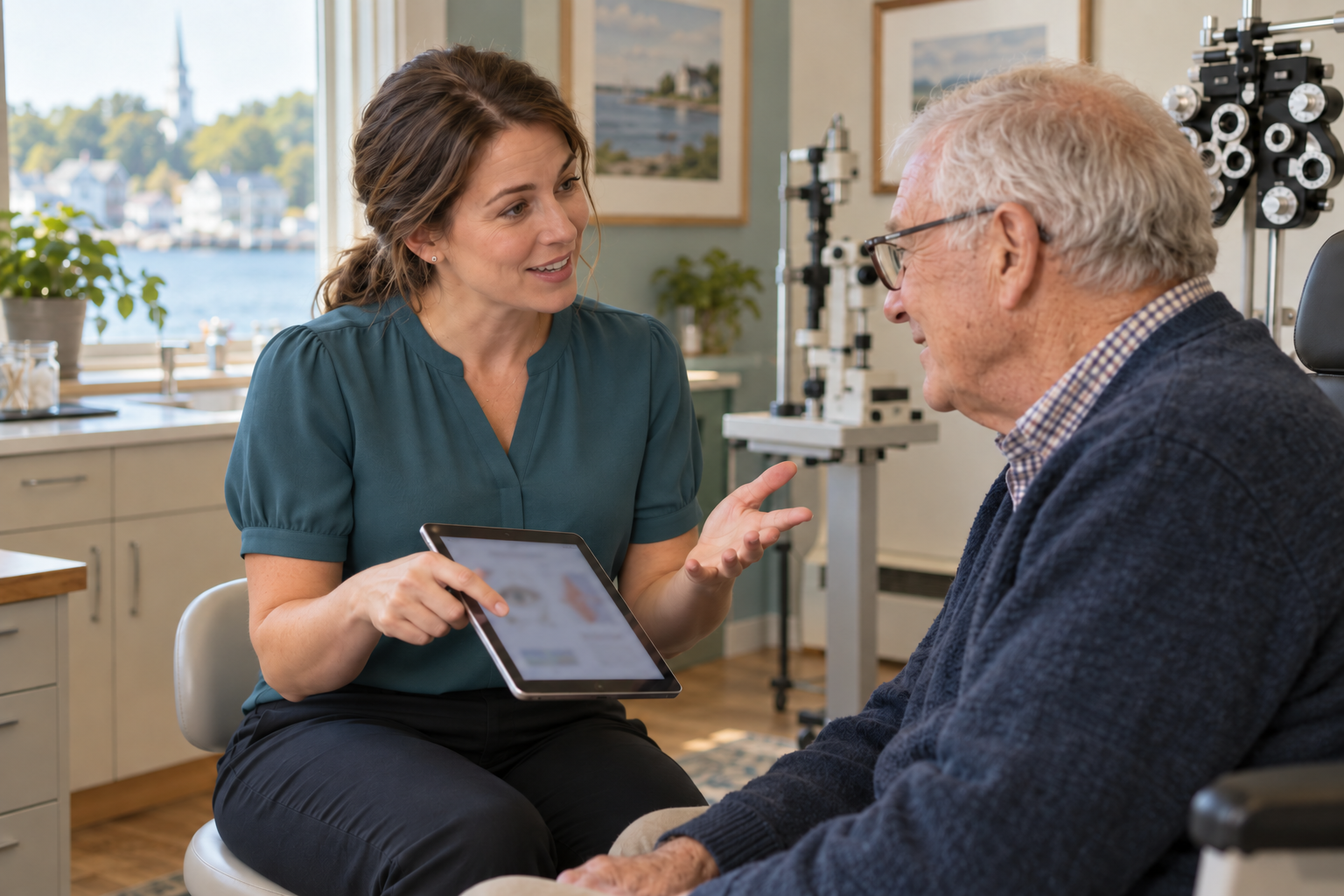
A cataract evaluation isn’t just “yep, that’s a cataract.” We’re measuring how much it’s actually affecting your day-to-day vision — night driving, reading, depth perception — because that’s what determines timing, not just what we see under the microscope.
A cataract diagnosis doesn’t mean surgery tomorrow. It means we now have something specific to watch, and we’ll tell you honestly when it’s actually worth doing something about — not before.
Here’s the thing patients are sometimes surprised by: we don’t refer you out the day we spot a cataract. Plenty of cataracts are mild enough to just monitor for a year or two — a stronger glasses prescription buys real time. When it does reach the point where it’s affecting your driving, your work, or your independence, we’ll walk you through what surgery actually involves and refer you to a surgeon we trust for the procedure itself, then handle your pre- and post-op care here, close to home.
If night driving has started to feel harder than it should, or your glasses prescription keeps changing and never quite feels right, that’s worth a look — not a reason to panic. At Eyes on Litchfield, we evaluate cataracts as part of a comprehensive eye exam and give you a straight answer about timing, not a sales pitch.



.png)
.png)