


.png)

Not sure whether you need an optometrist or an ophthalmologist?
Quick answer: An optometrist (O.D.) is a doctor of optometry who provides eye exams, diagnoses and manages most eye diseases, and prescribes glasses and contacts. An ophthalmologist (M.D.) is a medical doctor who also performs eye surgery. For routine and most medical eye care, you start with an optometrist — and if you ever need surgery, your optometrist refers you to, and co-manages your care with, an ophthalmologist.
Fair enough — the names are almost the same word, and both wear white coats and shine lights in your eyes. But the training and the day-to-day work are genuinely different, and knowing which one you need saves you a phone call.
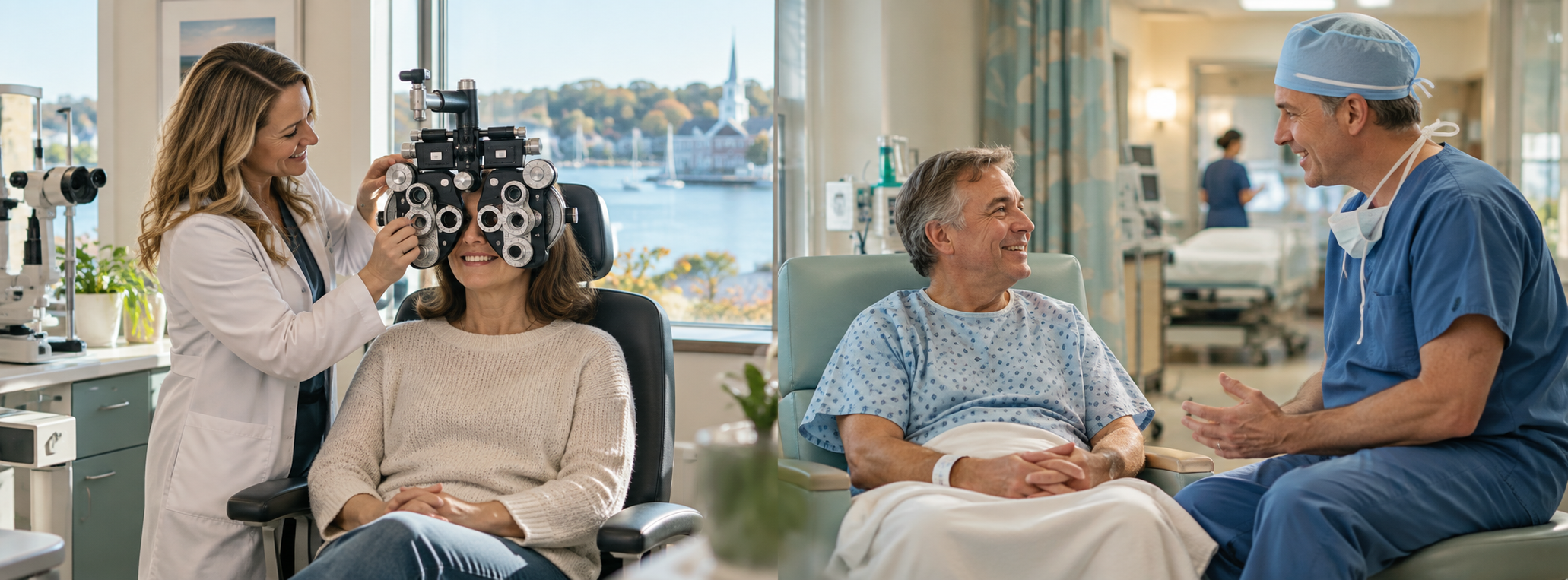
Dr. Plunske and Dr. Sideris are both Doctors of Optometry (O.D.), which means four years of optometry school after undergrad, focused entirely on the eyes. Day to day, that’s comprehensive eye exams, diagnosing and managing conditions like glaucoma, dry eye, and diabetic eye disease, fitting glasses and contact lenses, and catching the early signs of problems that need a specialist. This is who almost everyone should see first.
An ophthalmologist is a medical doctor (M.D. or D.O.) who completed medical school plus an ophthalmology residency, and in some cases a surgical fellowship on top of that. They perform eye surgery — cataract removal, retinal detachment repair, LASIK, and the like. Most ophthalmologists rely on optometrists to handle routine and ongoing care and refer patients to them for surgery specifically, then hand care back afterward.

Usually yes, from an optometrist or your primary care doctor — and most insurance plans require it anyway.
Yes. Optometrists diagnose, treat, and monitor glaucoma with medication and regular monitoring; surgery, if it’s ever needed, is the only piece that goes to an ophthalmologist.
Yes — Doctor of Optometry is a four-year doctoral degree with its own licensing exams, distinct from an M.D. but a doctor all the same.
If you’re not sure which one you need, call us. Most of the time, the answer is: come see us first, and we’ll tell you honestly if you need anything more.


.png)
.png)